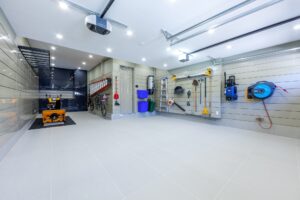
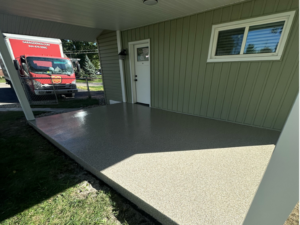
No, it is not too late. Fall is actually one of the best times to coat a garage floor in Grand Rapids, and even once winter sets in, a polyaspartic system can be installed in cold conditions that would stop standard epoxy. The mild, dry days of September and October make for easy installs, and getting the work done before the snow flies means your floor is protected against road salt and freeze-thaw the moment the season hits. The one thing that decides whether a cold-weather install works is the coating chemistry, and that is where the right system matters.
Why fall is prime time in Grand Rapids
Early fall hits the sweet spot for garage floor coatings in West Michigan. Slab temperatures are still comfortably warm from summer, humidity is dropping, and there is a clean window before the first hard freeze. Booking in this stretch also gets your floor cured and ready before winter arrives, so it is protecting your concrete right when salt, slush, and freeze-thaw start doing their worst. Waiting until spring means another full winter of salt sitting on bare or aging concrete.
The temperature problem with standard epoxy
Here is why timing gets talked about at all. Standard epoxy needs warmth to bond and cure. As a general rule, the concrete slab and air want to be around 50 to 55°F or higher for epoxy to set properly, and it cures slowly, often keeping a garage out of use for days. In a Grand Rapids garage, the slab runs colder than the air for much of late fall and winter, and cold spots near doorways, vents, and exterior walls can fall below the range even when the middle of the floor is fine. That is what makes people assume they have missed their window.
Why polyaspartic changes the timeline
Polyaspartic coatings rewrite the calendar. They install across a much wider temperature range than epoxy, including cold conditions, and they cure fast, often walkable in hours rather than days. Because Garage Kings West Michigan builds floors with an epoxy base coat locked in by a UV-stable polyaspartic topcoat, the system is far more forgiving of cool weather than a plain epoxy floor. That is the reason a professional install can go down in late fall, and even in winter, when a DIY epoxy kit would never cure. Our own breakdown of epoxy vs polyaspartic for a Michigan winter digs into how each one behaves as the temperature drops.
It is rarely too late. The question is not the calendar, it is the coating. Polyaspartic installs in conditions that shut standard epoxy down for the season.
How pros install in cold weather
Cold-weather installs are about control, not luck. A professional crew manages the conditions so the coating cures the way it should:
- Checking slab temperature, not just air. The concrete temperature drives the cure, and the coldest spots near doors and walls get checked first.
- Warming the space and materials. Bringing the garage and the coating products up to the right range helps the system bond and cure evenly.
- Adjusting the mix for the conditions. Experienced installers tune the materials to the temperature so cure times stay on track.
- Prepping properly first. The slab is mechanically ground and repaired regardless of season, which is what gives the coating something to grip.
This is also why cold-weather coating is a job for pros. The margin for error shrinks as the temperature drops, and the fixes are the kind of thing a rental grinder and a big-box kit cannot deliver.
Epoxy versus polyaspartic timing at a glance
| Factor | Standard epoxy | Polyaspartic system |
|---|---|---|
| Temperature range | Needs a warm slab, roughly 50 to 55°F and up | Installs across a much wider, colder range |
| Cure speed | Slow, often days out of use | Fast, often walkable in about 24 hours |
| Best season | Spring through fall | Year round with a pro install |
| Before-winter fit | Fine in early fall, risky once it turns cold | Works in late fall and winter |
Why getting it done before winter pays off
Beyond the install itself, timing protects your floor. A coated floor gives road salt and meltwater nowhere to soak in, and it shields the concrete from the freeze-thaw cycling that pits and spalls bare slabs over a Michigan winter. Coat in fall and your garage heads into the toughest months already protected. There is a scheduling upside too: fall books up as homeowners rush to beat the freeze, so reaching out early gets you a better spot on the calendar.
Garage floor coating timing FAQs
Is it too late to coat my garage floor before winter?
No. Early fall is prime time in Grand Rapids, and a polyaspartic system can be installed even in cold conditions later in the season.
Can you coat a garage floor in winter in Michigan?
Yes, with a polyaspartic system and proper cold-weather technique. Standard epoxy is much harder to install once the slab turns cold.
How long before I can use the floor?
Our systems are typically walkable in about 24 hours and ready for vehicles in about 72 hours, depending on conditions.
Should I just wait until spring?
Waiting means another winter of salt and freeze-thaw on unprotected concrete. Coating before winter protects the slab through the hardest season.
Beat the freeze in your Grand Rapids garage
There is still time to get your garage floor coated and protected before winter. Garage Kings West Michigan installs epoxy-and-polyaspartic garage floor coatings built for Michigan conditions, with most floors done in a single day and prepped the right way from grind to topcoat. We serve Grand Rapids, Wyoming, Kalamazoo, Kentwood, Muskegon, Holland, and nearby areas across West Michigan.
Call (616) 438-0748 to check the schedule and request a quote.