Quick answer: Of all the concrete patio coating options available, a polyaspartic coating (or an epoxy base with a polyaspartic topcoat) lasts the longest outdoors in West Michigan, typically 15 to 20 years. It resists UV fading, flexes through freeze-thaw cycles instead of cracking, and shrugs off road salt and rain. Epoxy on its own works best indoors, since it fades faster in direct sun. Polyurea holds up well in high-traffic spots but comes in fewer colors. Acrylic coatings and plain sealers cost the least and go on fastest, but they wear out sooner and need reapplying every two to three years.
Below, we compare each concrete patio coating option side by side, look at how the finishes look, and walk through how to pick the right system for Michigan weather.
Concrete patio coating options at a glance
Here is a quick comparison of the most common concrete patio coating options and how each one performs in a West Michigan climate.
| Coating | Best for | Typical outdoor lifespan | Michigan strengths |
|---|---|---|---|
| Polyaspartic | Long-term outdoor durability | 15 to 20 years | UV stable, fast curing, flexes with freeze-thaw |
| Epoxy base + polyaspartic topcoat | Decorative patios that need to last | 15 to 20 years | Strong bond, rich flake look, UV-protected top layer |
| Epoxy only | Covered or shaded patios | 3 to 5 years outdoors | Hard finish, many colors, but yellows in direct sun |
| Polyurea | High-traffic outdoor areas | 10 to 15 years | Very tough and flexible, limited color range |
| Acrylic / sealer | Quick refreshes and DIY | 2 to 3 years | Simple to apply, needs frequent reapplication |
Polyaspartic patio coatings
Polyaspartic is the coating we reach for most often on outdoor concrete in West Michigan, and it is the finish that holds up longest against Michigan sun and snow. It stays clear and color-true under UV light, so your patio will not turn yellow the way an untreated epoxy can. A peer-reviewed study on how salt and freeze-thaw cycles attack concrete explains why that flexibility matters so much once winter sets in, since the same freeze-thaw process that eats away at bare concrete is exactly what a flexible coating is built to resist. It also stays slightly flexible, which matters when the slab expands and contracts through every freeze and thaw cycle. Because it cures fast, most polyaspartic patios are walkable within about 24 hours. If you want the full breakdown of why this system wins outdoors, our epoxy vs polyaspartic for a Michigan winter guide compares the two head to head.
Epoxy patio coatings
Epoxy patio coatings create a hard, glossy, chemical-resistant surface, and they come in a wide range of colors. On their own, though, standard epoxies are sensitive to sunlight and can chalk or yellow on an exposed patio within a few seasons, a durability gap that industry trade press has been tracking as polyaspartic systems gain ground for exactly that reason. That is why we rarely install epoxy alone outdoors. Instead, we use an epoxy base coat for its strong bond to the concrete, then lock it in with a UV-stable polyaspartic topcoat. You get the depth and color of epoxy with the outdoor staying power of polyaspartic. Our garage floor coating systems use this same epoxy-and-polyaspartic build.
Polyurea patio coatings
Polyurea is a tough, flexible coating that resists abrasion and impact, which makes it a solid pick for busy outdoor areas and walkways. It cures quickly and stands up to Michigan moisture and salt. The trade-off is color choice: polyurea comes in a narrower range of shades than a flake or metallic system, so it is often used as part of a layered build rather than the decorative top layer.
Acrylic coatings and concrete sealers
Acrylic coatings and penetrating sealers are the simplest concrete patio coating options, and the easiest to apply yourself. A sealer soaks into the concrete to reduce staining and moisture damage, while an acrylic coating adds a thin layer of color and sheen. Both give a light refresh, but they wear thin under foot traffic and Michigan weather and usually need reapplying every two to three years. If your slab is structurally sound and you mainly want protection, a sealer can be worth considering before you commit to a full coating.
Patio finish styles: flake, metallic, and solid color
Once you choose a coating system, you choose how it looks. The same durable base can carry very different finishes:
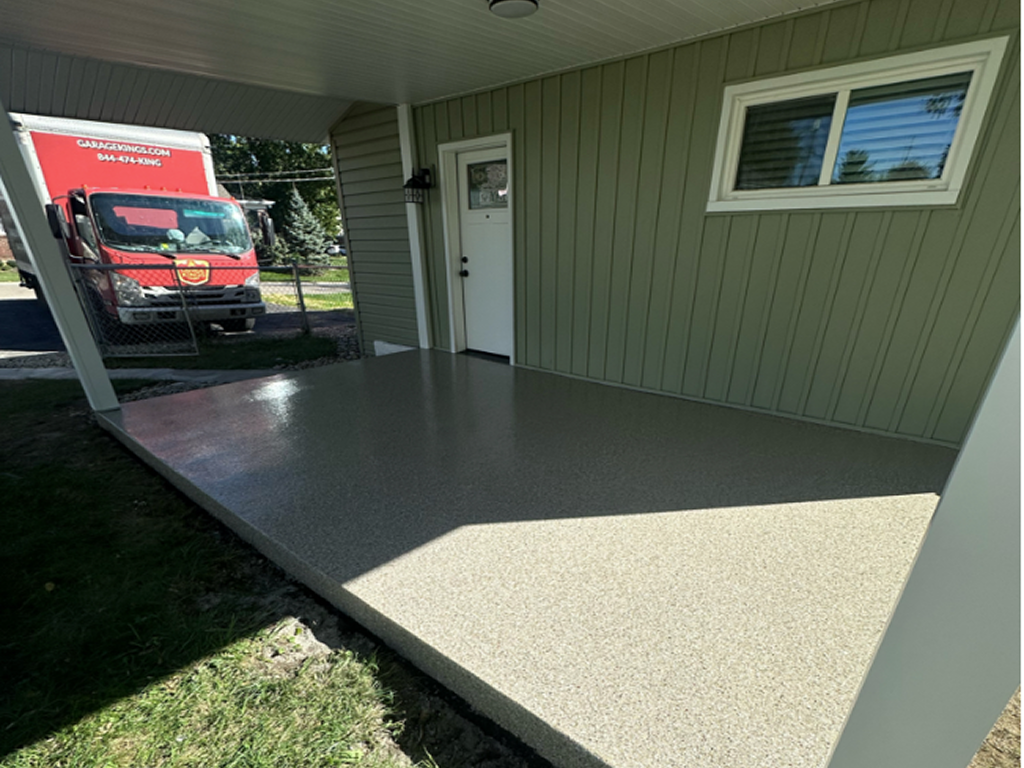
- Decorative flake: color chips broadcast into the coating for a speckled, granite-like texture that hides minor imperfections and adds grip.
- Metallic: a marbled, high-gloss look with movement and depth, best on covered or partially shaded patios.
- Solid color: a clean, single-tone finish that pairs well with modern outdoor spaces.
We offer dozens of flake blends and solid colors, and the same systems carry over to a pool deck if you want your patio and deck to match.
The finish sells the look, but the coating decides how long that look lasts. Outdoors in Michigan, UV stability and freeze-thaw flexibility matter more than gloss alone.
How to choose the right concrete patio coating options for your West Michigan home
The right concrete patio coating options for your home depend on a few local factors. Weigh these before you decide:
- Freeze-thaw cycles. West Michigan slabs move all winter. A flexible system like polyaspartic resists the cracking that stiffer coatings can develop.
- Sun exposure. An open, south-facing patio needs a UV-stable topcoat so the color holds. A covered porch has more room for other finishes.
- Foot traffic. Patios used for grilling and entertaining benefit from a harder, abrasion-resistant build.
- Slip resistance. A textured flake or added grip additive keeps the surface safer when it is wet from rain or snowmelt.
- Slab condition. Cracked or spalled concrete can still be coated once it is ground, repaired, and leveled first.
Whichever system fits, proper surface prep is what makes it last. On every patio, the concrete is mechanically ground to open the pores, and cracks and pits are repaired before any coating goes down. You can read more about the full outdoor system on our outdoor coating systems page.
Concrete patio coating FAQs
Can you coat an old or cracked patio?
Yes. As long as the slab is structurally sound, it can be ground, repaired, and coated, even if it is weathered or cracked.
How long does a patio coating project take?
Most patio coating projects finish in one to two days, with light foot traffic typically fine within about 24 hours.
Will the coating get slippery when wet?
A textured flake finish or a grip additive adds traction, which helps on a patio exposed to rain and snowmelt.
Which concrete patio coating options last longest outdoors?
Polyaspartic and epoxy-base-plus-polyaspartic hybrid systems last longest outdoors in Michigan, commonly 15 to 20 years with normal care.
How much do concrete patio coating options cost compared to plain sealing?
A full coating system costs more upfront than an acrylic sealer, but it lasts five to ten times longer, so the cost per year of protection usually comes out lower over the life of the patio.
Ready to explore your concrete patio coating options?
Bring us your slab and your style, and we will match you with a coating built for Michigan weather. Garage Kings West Michigan installs UV-stable, freeze-thaw-ready patio systems with dozens of flake blends and solid colors to choose from, on a schedule that has most patios done in one to two days. We serve Grand Rapids, Wyoming, Kalamazoo, Kentwood, Muskegon, Holland, and nearby areas across West Michigan.
Call (616) 438-0748 or request a free quote to talk through your patio.